
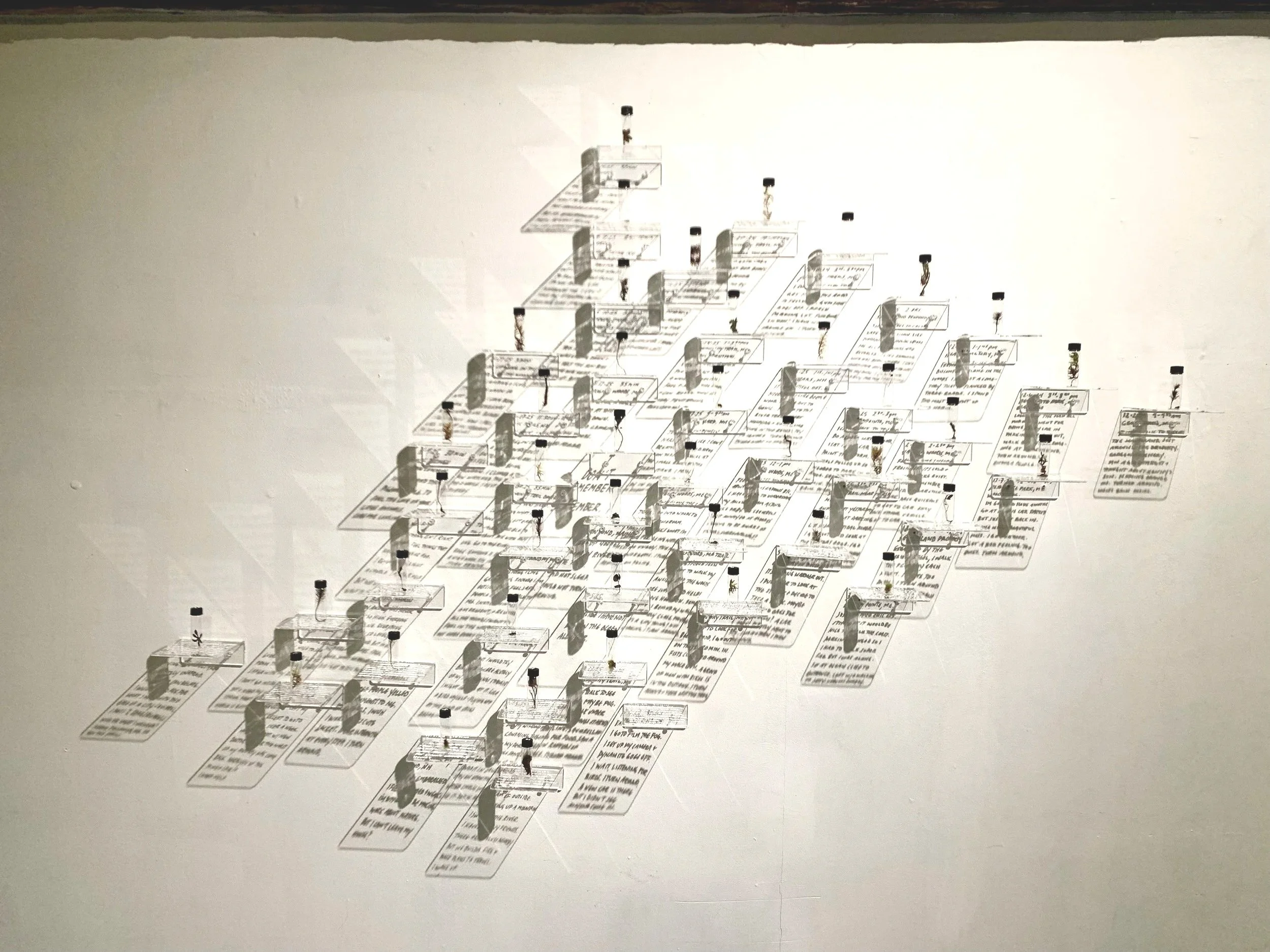
“The Ecology of Fear” Installation.
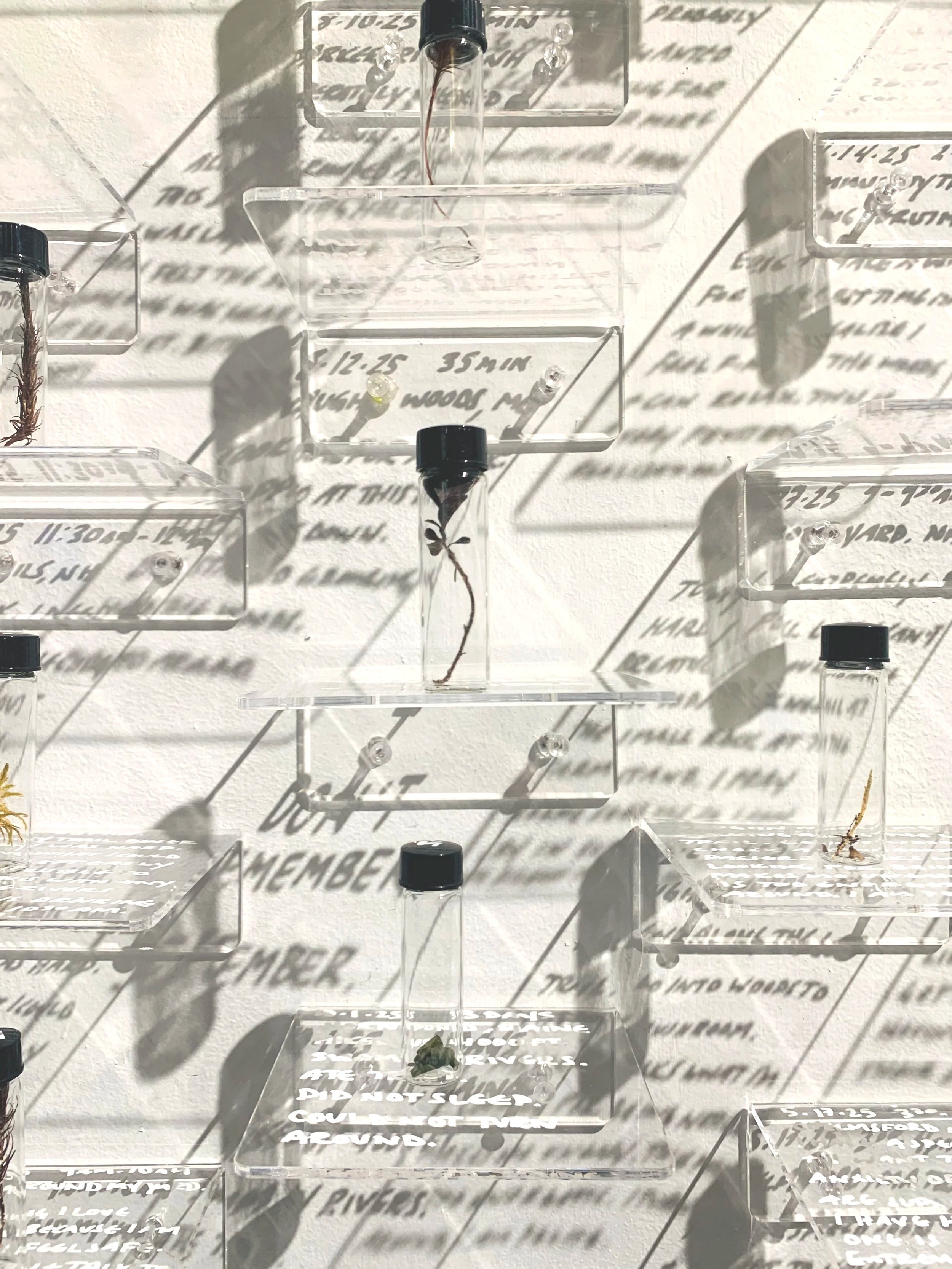
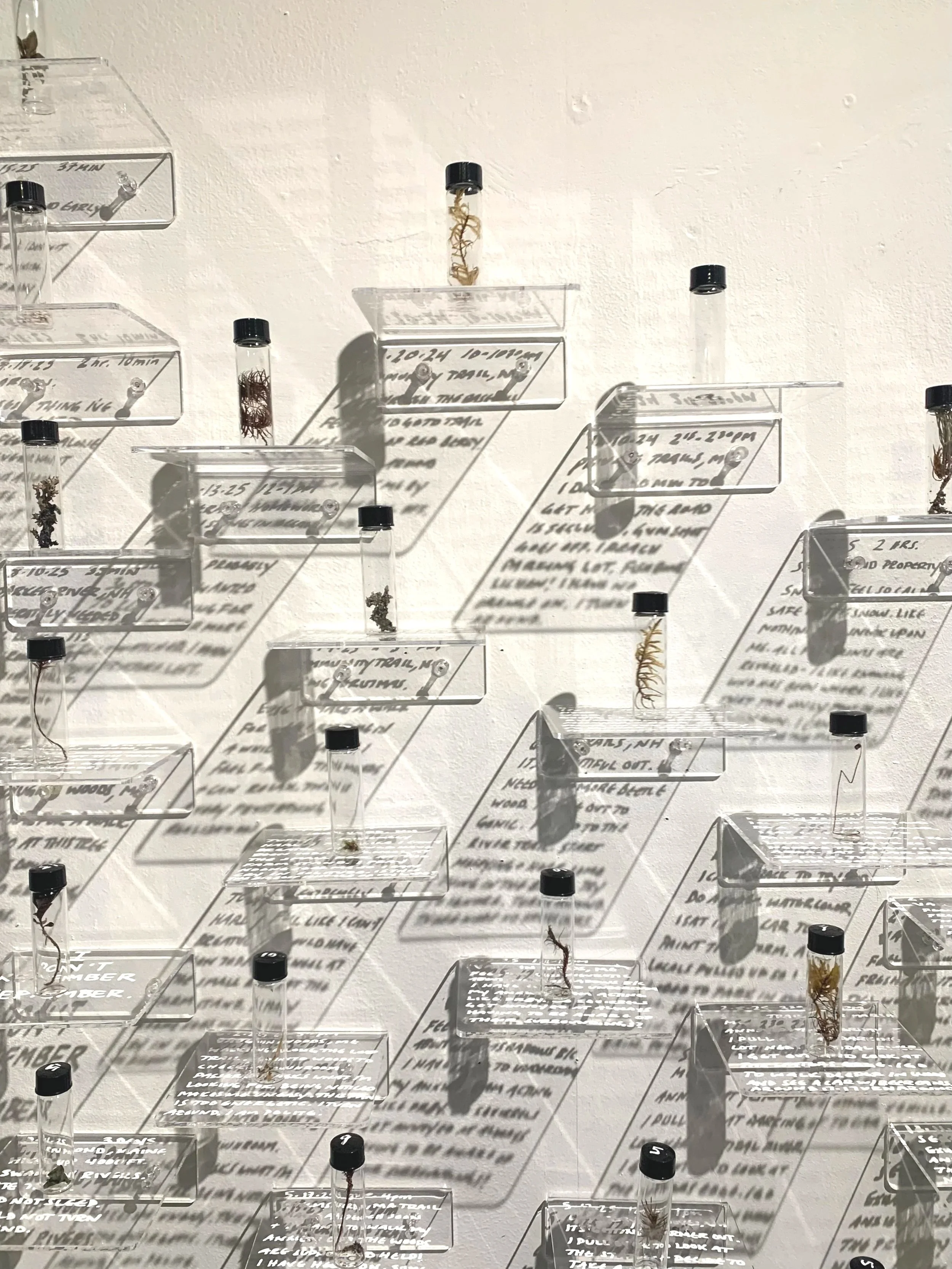
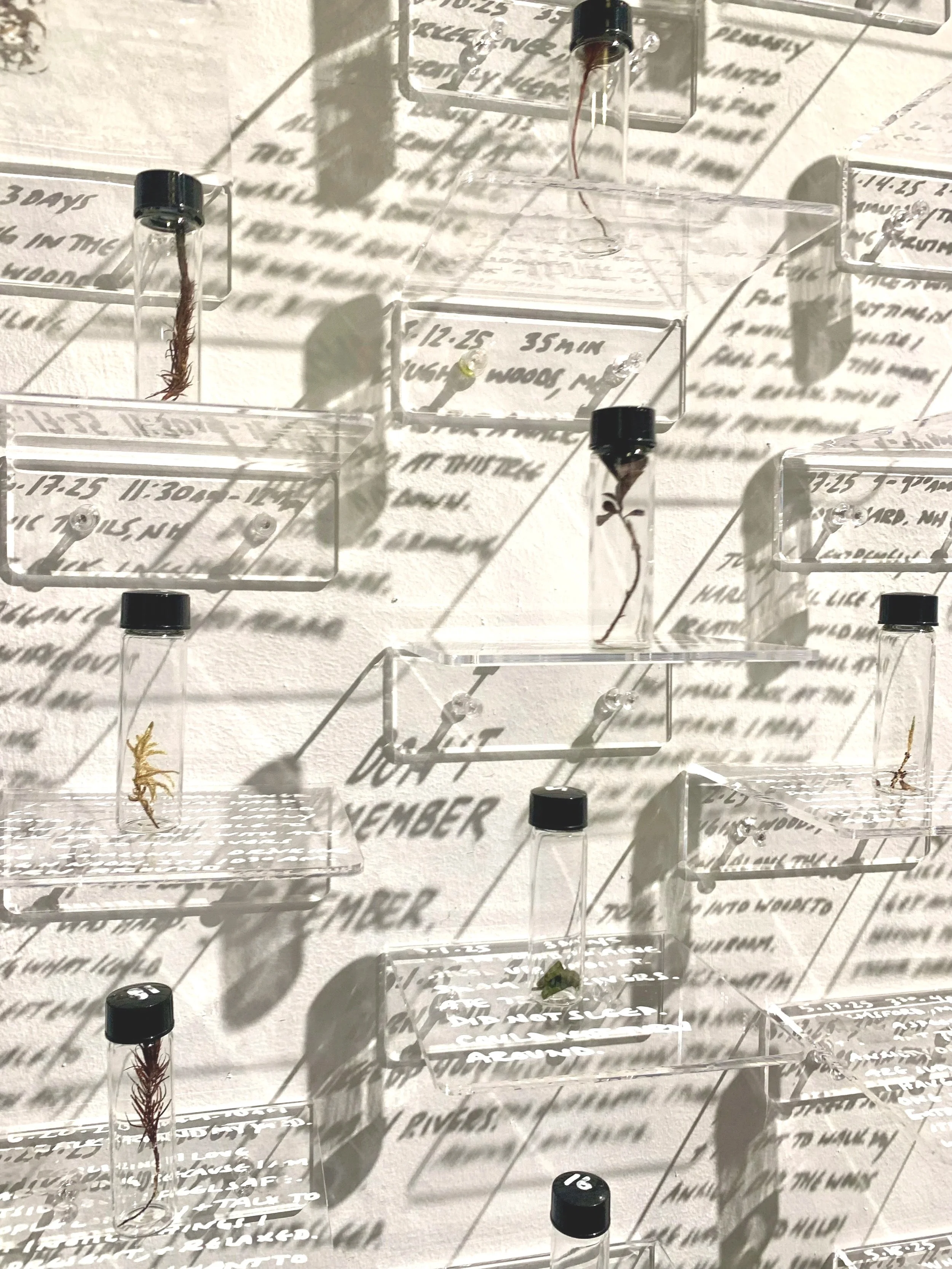
One year of personal data/ amount of time spent in the woods and moss samples from each documented location in New England. 2025
The "ecology of fear" is a concept in ecology showing predators impact prey not just by killing them but through the fear they instill, causing prey to change behavior (eat less, avoid good spots), and their physiology (stress). This leads to non-lethal effects like reduced reproduction that ripples through ecosystems, creating trophic cascades ( ie. plants growing back when fear keeps herbivores away). A well known example are the wolves that were reintroduced to Yellowstone, and the effect they had on redirecting and re'-establishing the flow of the river systems.
This theory has also been applied to urban enviornments incorporating social issues. “Ecology of Fear: Los Angeles and the Imagination of Disaster” is a 1998 book by Mike Davis that argues Los Angeles's frequent natural disasters (earthquakes, wildfires, floods) are a result of deliberate, market-driven urban development that ignores environmental risks, creating a city uniquely vulnerable to catastrophe. Davis critiques how the city's social inequalities are exacerbated by these hazards, which disproportionately affect the poor, while the wealthy imagine disaster through media fantasies rather than confronting the real, man-made dangers.
I became interested in this concept after observing my own relationship to fear and how that has affected and dictated my own patterns. I began to notice that I identify more with animals like deer, small birds and chipmunks, paying attention to their movements and reactions to gauge my surroundings. My patterns were altered, and my work that has so often been a solitary observation in the woods changed. I was now on high alert, unable to be taken away by my thoughts, I felt the need to get in and get out. Nature no longer slowed my heart rate, but would deliver bursts of cortisol. Heart beat drummed in my ears, and I jumped at every stick or rustling of leaves. I began collecting samples and bringing the woods into the safety of my home and documenting how long I was able to be in the woods until I felt the need to turn around. I wonder, if this pattern continues could it have any kind of effect on my favorite spots in the woods? Does everything happen for a reason?